
SolCoreFitness

Why I Don’t Care What You Feel in Training

mind-body connection training

Yes, you read that right. It might sound harsh of course, I care about my clients. But I don’t trust your “feeling” as the best feedback when we’re retraining movement or building new mobility and strength. Why? Because the way you feel muscular or emotional can easily fool you.

The “Feelings Aren’t Reality” Principle

Let’s break it down:

  • Feelings are fleeting: Soreness is not the same as progress; ease is not always a sign of good form.
  • Old patterns “feel right” until you rewrite them: Most adults, especially those over 40, have ingrained compensations (chronic tightness, weak links) that “feel normal” but are anything but functional.

Example: Ava’s Shoulder Surprise

Ava had practiced yoga for 15 years. She swore she “didn’t feel” her left scapula in certain movements. When cued to use new muscle patterns, it felt wrong even though video showed improved alignment. Three months later, she reported, “That weird feeling is my new normal, and I’m stronger than ever.”

Why the Mind-Body “Signal” Gets Smudged

Neuromuscular pathways what science calls “neuro-engrams” get built by repetition, good or bad. If you spend years overusing quads and underusing glutes, “activating glutes” will feel awkward… until you do it long enough for your brain to remap.

The Wrong Question: “What Should I Feel?”

Instead, ask:

  • Is my form correct by external measurement (mirror, coach feedback, video)?
  • Am I consistent, able to repeat the movement cleanly under fatigue or stress?
  • Am I building range, not just “burn”?

The SolCore Holistic Approach

We cue the whole system, not just one muscle. A myofascial release may not “feel” as intense as a quad set, but works the network. Myofascial stretching resets connective tissue, releases stuck points, and encourages your brain to “map” movement differently.

Myofascial stretching is designed to help you rediscover correct sensation safe, sustainable, functional by breaking old compensations.

The “Proprioceptive Gap” and Why It Matters

Research confirms that adults often lose proprioceptive awareness (sense of internal movement/location) in injured or underutilized zones. Feel nothing? It’s not failure it’s the reason to keep going!

Analogy: Learning to throw with your off hand feels weird, awkward, “wrong” until the brain “remembers” the pattern.

Progress Comes With Patience

  • Trust the process: the feedback “I don’t feel it” is a normal start.
  • Work with structured, science-based cues. Trust video, mirrors, coaches.
  • Allow time for awkward to become organized, then efficient, then easy.

Story: Mark’s Squat Transformation

Mark always felt his “quads burn” in squats ever glutes or hamstrings. Video analysis revealed knee collapse and instability. Four weeks of mind-muscle connection coaching later, he “felt nothing…just the work.” But his squats became smoother, pain gone, jumps improved, and his “difficulty feeling” was actually his nervous system building new precision.

Don’t Get Fooled by Good or Bad Days

Sometimes you’ll feel “on top of the world.” Other days, you’ll wonder if you’ve made progress at all. This is noise in the system. Long-term results improved posture, increased load, reduced pain—matter far more.

How to Rewire Your Response

  • Practice repeatedly. The brain needs many reps to overwrite an old motor engram.
  • Embrace feedback. Seek external observation not just sensation.
  • Shift focus: “What can I control alignment, cadence, effort?” not “How intense is the burn?”

When Feeling is the Goal

Some modalities breathwork, relaxation do hinge on internal sensation. In performance and corrective exercise? The map is built by doing the work, feedback, and patience.

Ready to Break Out of “Feeling-Based” Ruts?

If you’re tired of chasing sensation (“am I doing this right?”) and want expert eyes and science-based progress, book a Myofascial stretching consult/session with us. Let’s remap your movement for long-term gains, not just fleeting feels.

It’s not just working out, it’s building a foundation for a better life.

Find out more @
Facebook

LinkedIn

Pinterest

Instagram

Youtube

Bluesky

The Irony of Wanting to Get Out of Pain

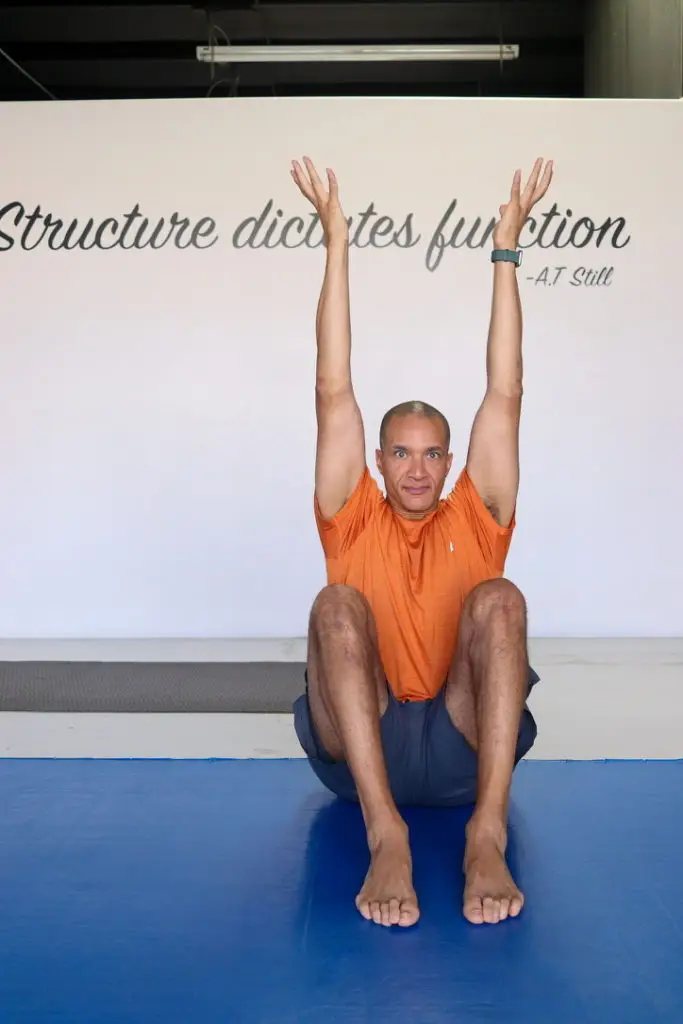
man doing seated ELDOA stretch with arms raised overhead for pain relief

I just want to be out of pain.” It’s a wish nearly everyone has uttered whether after a bad night’s sleep, a gardening mishap, or years of nagging aches. But the paradox is this: truly escaping pain long-term doesn’t involve avoiding it at all costs. It almost always means moving through discomfort, addressing the root cause, and correcting imbalances even when it’s challenging.

Pain: Not the Enemy, but a Messenger

Pain is your body’s dashboard light an alert that something is amiss. At first, it’s a whisper: a twinge while walking, dullness after a workout. Ignore it, and the volume rises: throbbing, stabs, or loss of mobility. Eventually, untreated pain will disrupt sleep, mood, relationships, and even your vision for the life you want.

Client story “Paul’s Pattern

Paul loved hiking but developed recurring knee pain that started as occasional stiffness and morphed over months into chronic swelling. He tried band-aid fixes NSAIDs, ice packs, even a cortisone injection. Pain diminished… briefly. But the problem wasn’t gone it simply went silent until the next adventure.

Two Roads: Mask or Correct

There are really only two options:

  1. Mask the pain: Medications, passive modalities (ice/heat), or quick treatments offer momentary relief but rarely address why the pain existed in the first place.
  2. Correct the root: This path is more challenging. It requires assessment, addressing movement patterns, building resilience, and yes—sometimes working through discomfort to restore function.

Why the Quick Fix Usually Fails

Covering up pain or chasing only comfort leads to…

  • Reliance on escalating meds or procedures (Tylenol > opioids > cortisone > surgery)
  • Greater tissue breakdown behind the scenes
  • Loss of confidence in your body, fear of movement, and in time… more pain

It’s like duct-taping over a check engine light.

The Courage to Correct

Story “Terri’s Turnaround

Terri, a runner, had low back pain off and on for years. Every time it flared, she’d skip core work and double down on “rest.” She never got lasting relief because she never addressed why her back hurt: weak glutes, stiff thoracic spine, and poor pelvic stability. With support at Sol Core, Terri committed to a program focused on mobility, core strengthening, and gradual progress sometimes through discomfort. Did it hurt at first? Sure. But within three months, her pain was gone, running was easier, and her confidence soared.

True Recovery Means Facing the Source

Long-term change relies on:

  • Assessment: Find WHY pain is present (movement dysfunction, imbalance, weakness, compensation).
  • Precision: Use corrective exercise and manual therapy to restore optimal patterns—don’t guess or self-treat randomly.
  • Consistent, Targeted Effort: Improvements take time. Your nervous system, joints, and fascia adapt only with persistent, quality input.
  • Learning Your Signals: Pain is rarely “fixed” overnight. Honor signals—differentiate productive discomfort from warning pain.

Why Even “No Pain” Isn’t Always Good News

Some clients say, “But I don’t hurt now—do I need to change?” Yes. The body is good at compensating (masking imbalances by overusing other tissues). Pain is sometimes the last sign. Like thirst, once it hits you, you’re already dehydrated.

Client Example: Maya’s “Hidden” Knee Risk

Maya, a hiker, had great energy no pain yet but her squat form and stair gait were off. Early intervention with a holistic exercise and fitness program corrected these patterns, preventing the injuries many of her friends later faced.

The Mindset Shift: See Discomfort as Positive

  • Productive Discomfort: Good pain is what you feel when a tight muscle finally stretches, or weak tissue begins to fire correctly.
  • Destructive Discomfort: Bad pain is sharp, stabbing, or worsening with good alignment—signal to stop and reboot.
  • Growth Mindset: Understand that challenge yields resilience. The short-term test leads to robust, pain-free living.

Blending Therapy and Training

At SolCore, our [holistic exercise and fitness program] uses a blend:

  • Assessment: Functional screens, posture checks, history review
  • Osteopathic manual therapy: To restore joint and fascial mobility
  • Corrective exercise: To teach your brain and body new, pain-free movement patterns (ELDOA, myofascial stretching, core stability)
  • Progressive overload: Safe intensity increases to develop strength and function for real life

When Rest Becomes Harmful

Rest is crucial in acute injury, but rest without re-training fosters stiffness, weakness, and recurrence. The right movement is medicine.

Facing Fear: Why We Procrastinate

Many fear discomfort—“What if I make it worse?” The right guide helps you differentiate helpful pain from harmful, and supports you one step at a time.

Results That Last

  • Pain relief that doesn’t return
  • More confidence and strength for life’s demands
  • Skills to manage future setbacks, instead of cycling back to square one

Ready for REAL Progress?

Don’t settle for fleeting relief. Take the courageous route: address the root, learn the signs, and embrace the wisdom of discomfort. If you’re ready to truly break the pain cycle, start with our holistic exercise and fitness program you’ll gain more than just comfort; you’ll unlock lifelong energy and freedom.

It’s not just working out, it’s building a foundation for a better life.

Find out more @

Facebook

LinkedIn

Pinterest

Instagram

Youtube

Bluesky

How Extreme Ownership Can Transform Your Life

extreme ownership life transformation

In a world full of distractions and excuses, there’s a perfect lie: “My circumstances control my results.” But there’s a radical, life-changing alternative extreme ownership. This principle, popularized by Navy SEALs and embraced by world-class performers in every field, puts you 100% in charge: your actions, your outcomes, your future.

What Is Extreme Ownership?

Extreme ownership means taking absolute responsibility for everything in your sphere. It’s tough medicine—when you win, it’s because you led wisely; when you stumble, you look to self-correct first.

  • Did you miss a training session? No blame, just “What can I do to set myself up better tomorrow?”
  • Did an injury resurface? “What cues did I miss? What can I prep differently next time?”

Client Story: “Andy’s Accountability Block”

Andy was frustrated: “I keep getting hurt and can’t seem to build momentum.” At first, he blamed bad luck, “old injuries,” or even his schedule. The turning point came when he accepted: results good and bad were his to own. With help, Andy started tracking habits: sleep, meal prep, warm-ups, scheduling sessions. He noticed patterns late nights sabotaged progress; skipping warm-ups led to old knee pain. By owning the process, Andy reclaimed his health and shifted from passive victim to unstoppable advocate.

Seven Lessons of Extreme Ownership (Inspired by the SEALs)

  1. Seize Accountability – Every outcome is a case study. Celebrate wins, and study setbacks—what can YOU change?
  2. Clarity of Motivation – Know why you want results. Keep your “why” where you see it daily.
  3. Build a Simple Plan – Don’t overcomplicate; focus on big levers (daily movement, meal prep, sleep).
  4. Remove “Blamethink” – Excuses feel easy, but stall growth. Trade them for honest appraisal, then action.
  5. Act on Priorities – Decide what matters—progress here drowns out what’s less important.
  6. Seek Collaboration – Ownership isn’t isolation. Ask for help, coaching, or guidance—but always act.
  7. Small Acts, Big Results – String a hundred small wins into momentum; never wait for a “heroic” save.

Moving From Victimhood to Victory

When you own your routines, you see obstacles as surmountable—or at least as learning steps. Excuses melt away in the light of focused attention.

  • Miss a workout? Find a slot tomorrow. Didn’t meal prep? Assess, adjust, and try again.
  • Progress stalls? Communicate with your coach, review your routines, and fine-tune.

Extreme Ownership in Fitness

How you train is how you live. Clients who thrive:

  • Log every session—wins and misses.
  • Adjust meals as soon as energy lags or recovery drops.
  • Stand up for their priorities—even when family and work tug from all sides.
  • Ask for feedback, embrace correction, and act on advice.

Personal Training and Manual Therapy as the Ultimate Support

Our personal training and manual therapy programs aren’t there to “fix” you, but to teach you ownership. We partner:

  • With each assessment, you take the lead on daily rituals and routines.
  • You’re coached in proactive recovery, not passive treatment.
  • Accountability means a friendly check-in and a nudge, not a rescue.

Ownership = Freedom

Here’s the paradox: taking responsibility, even for mistakes, is liberating. You quickly learn that you’re more capable, creative, and resilient than you thought.

Client Example: “Lisa’s Leadership Leap”
Lisa always waited for cues—“what do I do next?” Once she took control, she scheduled sessions, planned meals, and tracked her own progress. Her results accelerated, and—crucially—she felt JOY in the process.

Common Pitfalls (and How to Fix Them)

  • Slipping back into “blame mode”? Pause and reflect: “What did I influence here?”
  • Waiting too long to address an injury or challenge? Reach out, get feedback, and immediately act on it.

Building a New Identity

The biggest change? You become the kind of person who sets goals and achieves them, because every step is under your influence.

Ready for Extreme Ownership?

Stop waiting for “when the time is right.” Reclaim your results and future. Want a partner in ownership? Explore our personal training and manual therapy options and discover what true transformation feels like when you lead the way.

It’s not just working out, it’s building a foundation for a better life.

Find out more @
Facebook

LinkedIn

Pinterest

Instagram

Youtube

Bluesky

Trust the Process to Achieve Real Change

Trust the process to achieve real change

Trust the process. Coaches, mentors, therapists all say it at some point. But what does it actually mean for your health, your progress, and your long-term results? Most people get excited to start a new journey be it a fitness plan, recovery routine, or life overhaul but lose steam when results don’t come instantly. The truth is, any meaningful change comes from steady engagement with the process, not from chasing overnight breakthroughs.

Why Trusting the Process Is So Hard

Let’s be honest: we live in an instant-results culture. Order today, it’s shipped tomorrow. Click “like,” get a dopamine hit. Even in wellness, we’re bombarded with “30-day transformation” promises. But in the real world, true change looks more like a slow sunrise a gradual lightening, not a dramatic flash.

Client Story: “Travis and the Patience Game”
Travis was a cross fitter who injured his shoulder a mild tear that ended up needing months of work. Used to fast results, he grew frustrated by slow rehab: “Why am I not 100% after 4 weeks?” His turning point came when he realized each week brought small wins better sleep, less inflammation, a pain-free workday. By the 9th week, his “small wins” had added up to big progress but only because he surrendered to steady, thoughtful work and stopped chasing shortcuts.

The Four Stages of Real Change

  1. Uninformed Optimism: At first, you’re excited, hopeful, and ready to work. Easy wins come quickly (weight drops, energy surges, pain decreases a bit).
  2. Informed Pessimism: Progress slows or plateaus. Challenges multiply. Doubt arrives: “Is this working?”
  3. Valley of Despair: You face setbacks, mental fatigue, maybe even crisis (“I blew it—maybe I’ll quit”).
  4. Informed Optimism: Consistency starts paying off. Skills become natural, new strength or mobility returns, confidence soars.

The catch? Only those who trust the process make it to the fourth stage.

“Trust” Means Active, Not Passive

Trusting the process isn’t about blind faith or passivity—it’s about active participation. That means:

  • Showing up, even when you don’t feel motivated
  • Recording data (rest, sleep, mood, pain, wins, setbacks)
  • Communicating honestly with your coach or therapist

The Hidden Magic of Accountability

Self-guided change is possible—but community support, expert guidance, and outside “eyes” make progress easier, faster, and more fun. At SolCore, clients who stick to regular check-ins are far more likely to stay on track, adjust when obstacles arise, and celebrate progress at every stage.

Why Resets Take Time: Physiology and Mindset

  • Tissues need to adapt: Fascia, muscle, and joints repair slowly—three months for new collagen, six for tendon strength.
  • Nervous system rewiring: Habits are entrenchments in your nervous system; remapping takes countless reps and positive exposures.
  • Mindset maturity: Only by repeating the process through multiple setbacks do you really internalize resilience.

Story: “Naomi’s Year of Change”
Naomi came for osteopathic therapy after years of back pain and “failed” programs. We set realistic goals, focused on gradual posture changes, and celebrated every micro-victory. Six months in, her pain was 50% better but—more importantly—she was empowered to coach herself out of setbacks. By the one-year mark, she was not only pain-free, but confident, consistent, and self-motivated.

How to Enjoy (or At Least Honor) the Process

  • Set micro-goals: Track minutes walked, water drunk, or stretches performed—not just big milestones.
  • Document how you feel: Notice energy, sleep, focus. Progress is about wholeness, not just metrics.
  • Forgive yourself for dips: Setbacks are normal—not a sign of failure, but of growth.
  • Ask for reminders: Let your coach or teammates cheer you on through hard phases.

When to Adjust (Not Quit) the Process

If you’re consistent but not seeing any change after several months, it’s time for honest feedback and perhaps expert reassessment. Sometimes the path requires adjustment, not abandonment.

Role of Osteopathic Manual Therapy

Osteopathic manual therapy supports the process by:

  • Diagnosing small blockages and imbalances that sabotage progress
  • Resetting tissue and alignment so new habits can “stick” faster
  • Encouraging patients to be participants, not just patients

Clients often say: “The hands-on session lit a spark for faster breakthroughs—because it built on months of honest work at home.”

Final Words: Embrace the Long Game

Great change is never “done”; it’s a lived, evolving process. There’s joy, strength, and pride in mastery not just results. Whether you’re starting today or starting over for the tenth time, the key is to trust the process, show up, and welcome the learning journey itself.

Ready for guidance and support? Book a session with us for osteopathic manual therapy or a consult on your next training phase. Let’s build something that lasts together.

It’s not just working out, it’s building a foundation for a better life.

Find out more @
Facebook

LinkedIn

Pinterest

Instagram

Youtube

Bluesky

SolCore Fitness Therapy Success Story: Joanne Brown’s Holistic Transformation

Joanne Brown shares her SolCore Fitness Therapy success story

At SolCore Fitness Therapy, we know that the best transformations are built on science, support, and a customized approach. Joanne Brown’s journey is a testament to what happens when the right method, the right environment, and the right mindset come together.

Joanne’s Struggle: Stiffness, Pain, and “Stuck” in the System

Joanne arrived at SolCore on a typical New Mexican afternoon—tired, frustrated, and skeptical. She’d spent years drifting through exercise fads and well-meaning advice: swimming for fitness (helpful, but not enough weight-bearing load), daily walks (nice, but didn’t fix stiffness), and even prescription therapies that offered only fleeting relief. The frustrations compounded:

  • Chronic mid-back “pulls” that never quite resolved
  • Restless sleep, low energy, and a growing fear that her 60s meant giving up on movement joy
  • A sense that her own body was a puzzle, unsolved by “standard” approaches

Finding the Holistic Difference at SolCore

A friend recommended SolCore’s unique approach. On day one, Joanne noticed a difference: the group classes weren’t “bootcamp torture”—they were supportive, slow, and deeply educational. Led by Ekemba, she learned about the science of fascia, myofascial stretching, posture alignment, and real corrective exercise (not “one size fits all” templates).

Assessment and the Blueprint

Rather than jumping into random workouts, Joanne received a thorough movement screening—analyzing posture, joint function, and movement patterning. The result? A clear blueprint for her program:

  • Address mid-back and shoulder mobility
  • Integrate fascial stretching to relieve tension “chains”
  • Focus on strength from the inside out (core, posture, breath)

The Journey: Small Wins and Transformative Shifts

Over the next six months:

  • Myofascial stretching improved her daily movement and loosened mid-back tightness
  • Holistic classes (always capped at 15 people for direct attention) boosted her confidence
  • Personalized homework connected the dots on why her “bad days” came and went

Joanne’s favorite insight? “I learned my body isn’t broken—it was just missing the right stimulus and support.”

The Results: More Than Just Pain Relief

  • Freedom from daily mid-back pain (“I just didn’t feel quite right—now that’s just gone!”)
  • Greater mobility in her upper body and balance on walks
  • Deeper, more restorative sleep (“For the first time in years, I wake up refreshed!”)
  • Stronger connections to the group: community, encouragement, and accountability

Clients like Joanne consistently remark that SolCore’s group setting gives both expert feedback and camaraderie—never competition or pressure.

Why Holistic, Fascia-Focused Training Works

  • Integration over Isolation: Muscles don’t work alone; the group teaches you how chains move together.
  • Manual Therapy Meets Movement: Hands-on corrections prime the body, while classes reinforce efficient patterns.
  • Ongoing Education: Each session explains the “why” behind every stretch or drill—empowering clients to carry lessons into daily life.

Advice for Newcomers: Joanne’s Insights

  • “Don’t be nervous—you don’t need to be ‘fit’ to join.”
  • “Expect to learn. The more you understand about your body, the more you respect the process.”
  • “Progress isn’t always linear—some weeks you’ll leap, some you’ll simply stay the course. Trust the journey.”

Next Steps for Readers

If you’re skeptical about group exercise, tired of cookie-cutter routines, or worried your body’s “too far gone,” Joanne’s story proves that a science-based, holistic approach can rewrite your future.

Curious how you might benefit? Check out [The Ultimate Guide For A Holistic Exercises And Fitness Program] to learn the philosophy behind our approach—and see how we help clients of all ages build lasting change.

It’s not just working out, it’s building a foundation for a better life.

Find out more @
Facebook

LinkedIn

Pinterest

Instagram

Youtube

Bluesky

The Power of Contribution: How Giving Fuels Personal Growth in Holistic Health

The importance of contribution in holistic health and personal growth

Contribution” isn’t just the final chapter in personal growth models; it’s arguably the single force that expands and sustains all other areas of health, happiness, and fulfillment. As Tony Robbins (and research) remind us, giving is a human need—not just a virtue. But what does meaningful contribution look like in real life? How does it influence your well-being, body, and mindset?

Why Contribution Is the Keystone Human Need

All humans seek to grow, connect, and feel significant in their lives. But many find their deepest moments of fulfillment in contribution offering their time, skill, energy, or encouragement to others.

Contribution is:

  • The teacher staying late to help a struggling student
  • The friend who lifts you out of a rut
  • The fitness class member who cheers on a newcomer
  • The busy parent squeezing in time for a neighbor or volunteering at a community garden

Every gesture, big or small, ripples outward: “Living is giving,” as Robbins says.

Health Science: Giving Is Good for Your Body

Modern research proves what wisdom traditions intuited: giving triggers positive biochemistry boosting oxytocin, serotonin, immune response, and even longevity. Studies show people who volunteer regularly have:

  • Lower blood pressure
  • Improved self-esteem
  • Decreased rates of depression
  • Longer, more vibrant lives

The Shadow Side: When Giving Drains

But here’s the catch: giving without boundaries can lead to burnout. As Robbins and other experts teach, “You can’t pour from an empty cup.” Givers sometimes push themselves into patterns of over-extending, people-pleasing, or neglecting their own self-care.

The antidote? Contribution balanced with healthy self-worth and routines that fill your energy reserves.

Story: Maya’s Reframe

Maya, a SolCore member, loved volunteering at food banks and always put her children’s needs first. As months went by, she noticed a rise in exhaustion, daily aches, and resentment. “I was angry I didn’t have energy for my own health,” she said.

In coaching, Maya learned to “put on her own oxygen mask”—prioritizing three trainings weekly, carving out quick mindful walks, and recruiting her family into meal preps. Her mood lifted, pain receded, and suddenly, giving was again a joy instead of a drain.

True Self-Care: Give What You Possess

The most sustainable givers are those who prioritize their fitness, learning, nutrition, and wellbeing. Only when your cup is full can you “pour out” with abundance instead of depletion.

  • When you move and nourish your body, you show up energetically for your work and relationships.
  • When you seek education and support, you model healthy boundaries for friends, children, and community.

Concrete Habits That Expand Your Contribution

  1. Schedule Self-Check-Ins
  • One morning each week, note how your energy and mood feel.
    • Adjust routines to fill your tank (sleep, movement, rest) before it’s empty.
  • Involve Others in Your Wellness
  • Meal prep with children.
    • Stretch with partners or friends.
    • Share wins publicly not to brag, but to inspire.
  • Volunteer with Boundaries
  • Choose service opportunities that align with your values and availability.
    • Say no when needed remember, you are not an inexhaustible resource.
  • Practice “Micro-Giving”
  • Text encouragement.
    • Compliment a peer on their progress.
    • Offer to grab groceries for an injured neighbor.
    • Celebrate others’ victories, not just your own.

The Holistic Program: Multiply Your Impact

Take a look at [The Ultimate Guide For A Holistic Exercises And Fitness Program]. Our approach is about integration: we build your capacity, then teach you to support others through leadership, education, and encouragement.

At SolCore, we see it daily: clients who thrive in fitness naturally become helpers and leaders in group classes, family circles, and beyond. Their mood, clarity, and positivity attract others.

Giving as Healing

Contribution isn’t just an outward gesture—it’s healing for the giver. Serving others breaks self-absorption, shrinks anxiety, and anchors your sense of purpose.

Client Testimonial: “Helen’s Breakthrough”
Helen, a semi-retired nurse, lost her sense of impact after leaving the hospital. We helped her start a weekly stretching circle with friends, offering gentle cues from class. “I never realized that sharing what I learned for my own recovery would mean so much to others—and bring me so much joy,” she reflected.

Ways You Might Contribute (and Grow)

  • Host or invite others to join weekly walks or simple movement
  • Share recipes and meal prep tips with your community
  • Invite a hesitant friend to try a new class
  • Offer rides or check-in calls for those injured or recovering
  • Give genuine compliments—these cost nothing but mean everything

Fill Your Cup, Then Share

The more resilient, centered, and connected you are, the more you can give, love, and grow—creating ripples that last a lifetime.

Ready to build a well that overflows? Start with your own foundation The Ultimate Guide For A Holistic Exercises And Fitness Program is your next step.

It’s not just working out, it’s building a foundation for a better life.

Find out more @

Facebook

LinkedIn

Pinterest

Instagram

Youtube

Bluesky

How Do You Challenge Yourself to Grow? Balancing Goals with Holistic Wellness

Growth mindset and balance in holistic health

Growth is wired into us. Whether it’s a child’s urge to explore, an adult’s longing for new skills, or an elder’s wisdom in mentoring others, there’s a constant drive: Can I do more? Become better? Expand my world? But in the modern age, “more” often means faster, harder, busier… and too often, burnt out. Balancing growth with wellness body, mind, spirit is the true mark of a healthy journey.

The Double-Edged Sword of Ambition

Motivation sharpens the mind and lights the internal fire. But unchecked, it turns to restlessness—a need to hustle, a fear of stillness. It’s easy to fall into “not good enough,” always chasing the next target, never grounding in now.

At SolCore Fitness, we help clients shape ambition so it enriches every aspect of life not just one.

Tony Robbins’ Universal Need

Robbins identifies “growth” among the six core human needs, the pulse that once satisfied brings excitement and hope. But even he warns: pursue single-minded growth without balance, and you risk:

  • Missing out on present joys
  • Neglecting health or relationships
  • Sliding into chronic stress or even anxiety

Story: Brandon’s Burnout

Brandon, an executive and Sol Core client, loved progress. Five a.m. workouts, overtime at work, night school always “building.” He grew lean… until injury and fatigue forced a pause. Real growth, it turned out, included learning to rest, receive feedback, and enjoy victories without rushing to the next goal.

Stewarding Balanced Growth

1. Set Layered, Integrated Goals
Ask: Does this goal uplift your body, mind, and relationships? Consider a weekly health challenge plus quality time with family plus a new cooking experiment.

2. Pursue Depth, Not Just Breadth
Master one area—not just dabble in ten. If it’s deadlift technique, study it, film it, get coaching. Then, when ready, expand to a new activity.

3. Foster “Down” Cycles
Nature cycles so should you. Honor days for stretching, mindfulness, or even joyful skipping of routines. Growth solidifies in rest.

4. Track Emotional Fitness
Keep a journal: When am I happiest? Most stressed? What routines support or sabotage me? Emotional well-being is as vital as reps and heart rate.

5. Surround Yourself with Growth Minded Community
Join classes or groups with growth built in where mutual encouragement, shared learning, and honest feedback are the norm.

How Holistic Wellness Accelerates Growth

  • Mobility unlocks access to new skills and sports
  • Nutrition sharpens focus, immune strength, energy
  • Stress management allows you to rebound from setbacks, rather than spiral

Story: Janine’s Multi-Faceted Flourish

Janine arrived at SolCore seeking to “improve everything.” We coached her to grow wisely: setting seasonal priorities, learning to say no, and blending high-intensity sessions with restorative ELDOA and breathwork. One year: more muscle, more zen, fewer injuries, and—her words— “more laughter.”

Recognize the Signs: Too Much, Too Little

  • Overstriving: Sleep disruption, injury, mood swings, emotional “flatness”
  • Undergrowing: Boredom, stagnation, self-doubt, decreased energy

Balance is a dance a constant adjustment, not a static position.

The Six Human Needs in Action

  • Certainty: Build stable routines.
  • Uncertainty: Try new skills or classes.
  • Significance: Aim for a new milestone AND help others do the same.
  • Connection: Pursue shared activities.
  • Growth: Learn, challenge, adapt.
  • Contribution: Celebrate and serve.

Practical Tools for Balanced Growth

  • Monthly “mini-retreat”: Pause, review, reset.
  • Habit stacking: Attach new tasks to old routines (stretch after brushing teeth).
  • Meditate on gratitude—find joy in progress, not just outcomes.

Why Group Training and Science-Based Programs Sustain Growth

Unlike “DIY” fads, a [holistic exercise and fitness program] gives you:

  • Weekly fresh challenges that evolve with your gains
  • Feedback and camaraderie so you don’t go it alone
  • Progressions that span strength, mobility, nutrition, and mindset

Clients thrive when their environment supports ambition and rest.

Know When to Dial Back, Shift Gears, or Celebrate

Growth can mean digging in. It can also mean forgiving, pausing, or switching focus. Wisdom is knowing which today.

Get Support, Share Wisdom

If you crave balanced, sustainable, holistic growth body, mind, and spirit start by exploring The Ultimate Guide For A Holistic Exercises And Fitness Program. Ready for a human coach (not just an algorithm)? Reach out. We’ll train, pause, celebrate, and adjust so you not only grow, but flourish.

It’s not just working out, it’s building a foundation for a better life.

Find out more @
Facebook

LinkedIn

Pinterest

Instagram

Youtube

Bluesky

Pursuing Significance, Love, and Connection Through Holistic Health

Balancing significance, love, and connection for holistic health

From the classroom to the workplace, from sports to social gatherings, two of the strongest motivators in human nature are the desire for significance (to matter, to stand out) and the yearning for love and connection (to belong, to be seen and valued by others). When these needs are met in balance, our health, motivation, and happiness flourish. But when one overtakes the other or either goes unfulfilled we suffer, physically and emotionally.

The Six Human Needs Framework

Tony Robbins describes “Significance” and “Love/Connection” as two of the six basic human needs. We crave recognition whether it’s praise, achievement, or status. We also crave connection—loyalty, intimacy, deep friendship, and family bonds.

But significance and connection sometimes pull in opposite directions. The pursuit of significance can lead to achievement, leadership, and personal bests… but in excess can breed isolation or even arrogance. Too much focus on connection can foster compassion and warmth… but unchecked, can mean codependency or diminished self-worth.

What Does This Have to Do With Health and Fitness?

More than you might think! These inner drives shape:

  • Why you walk into a group class or private session
  • Whether you use fitness for self-expression or community
  • When you push for a new personal best—or when you find happiness supporting someone else

Client Story:

Meet “Brian,” a long-time SolCore client, who began training for significance he wanted to lose 30 pounds, impress colleagues, and complete a marathon. Along the journey, he discovered a surprising happiness not from medals, but from the encouragement, friendship, and shared struggles in his group class. “I realized showing up for others and having them show up for me mattered more than my PR.”

Significance: The Light and Shadow

A drive for significance gets you up early, pushes you to try bold feats, to run farther or lift more than before. It’s what pushes people to rise to leadership and authority. But the shadow? Perfectionism, comparison, or fear of vulnerability. It can be hard to let go, to ask for help, or to enjoy a win without wondering, “What’s next?”

Love and Connection: The Essential Glue

Connection is the antidote: the reason many stick with an exercise routine is because of the group, trainer, or accountability buddy—the joy of being seen and cheered on. But taken to the extreme, the need for connection can lead to:

  • People-pleasing (“I do what the group does, even if it’s not right for me”)
  • Burnout from never saying no
  • Loss of personal boundaries (“I’ll skip MY workout for someone else’s needs”)

The Science: Health Outcomes and Human Needs

Harvard studies show that people with strong social ties exercise more, recover faster from illness, and live longer. On the other hand, “driven” types with poor connection are at higher risk for stress-related issues (like high blood pressure, anxiety, and sleep disorders).

Balancing the Equation in Real Life

A healthy, resilient client blends both:

  • Sets their own goals (significance)
  • Seeks and supports community (connection)

Each propels the other. When you feel valued, you achieve more. When you achieve more, you can give and connect at a higher level.

Practical Ways to Balance the Two

1. Set a “Big Goal” and a “Shared Goal”
Big Goal: “Deadlift 200 pounds.”
Shared Goal: “Attend every Saturday group class and encourage a newcomer.”

2. Check-In With Yourself Weekly
Are you neglecting your needs for recognition? Schedule a milestone assessment or try a new skill. Are you burning out from carrying others? Delegate, ask for help, or focus on your core priorities one week.

3. Use Exercise as a Relationship Builder
Invite a friend to walk or stretch with you. Swap recipes, share playlists, or take turns leading a session.

4. Communicate Openly
Share victories and struggles with trusted others. Honest feedback deepens connection AND reveals blind spots around personal motivation.

How SolCore Blends Both in Practice

  • Group classes limited to 15 for real attention and authentic connection—not just numbers.
  • Semi-private sessions that combine personalized achievement and mutual support.
  • Ongoing assessments to mark milestones but centered on collaboration and shared wins.

Trainer Insight:
“I always tell new clients: Whether you want to stand out or blend in, both are human. We’ll help you do both—celebrate your strengths, but also help you build a ‘team’ that shows up for you.”

If You Feel “Off-Balance”

Maybe you:

  • Always compete, never celebrate with others
  • Avoid group work or shy away from new faces
  • Focus only on relationships, never personal mastery

Reflect: What’s missing? How can you step into a program that provides both helping you become “the best version of yourself” AND “someone who helps others shine”?

Your Next Step

If you want to get clarity on your personal motivation, or just want a model for thriving in both personal achievement and deep connection, dive into The Ultimate Guide For A Holistic Exercises And Fitness Program. It’s our blueprint for building health that supports your ambitions, relationships, and life.

It’s not just working out, it’s building a foundation for a better life.

Find out more @
Facebook

LinkedIn

Pinterest

Instagram

Youtube

Bluesky

Are You Driven by Certainty or Uncertainty? How to Find the Right Balance for Holistic Health

Certainty and Uncertainty in Holistic Health

Our Two Fundamental Needs: Stability & Adventure

Every person carries a push-pull between wanting the comfort of routine and the thrill of something new. In wellness, as in life, both needs matter. Robbins’ model names them “Certainty” (the need for predictability and safety) and “Uncertainty” (the hunger for variety, challenge, novelty).

How Certainty Shows Up in Health

Certainty is:

  • Knowing you’ll do the same stretches before each class
  • Having a precise post-injury rehab plan
  • Planning meals by the week for predictable results
  • Returning to a favorite dance class for years

Too much certainty? You risk stagnation, boredom, and a resistance to change (even when your body asks for it).

How Uncertainty Sparks Growth

Uncertainty is:

  • Trying a new routine just for fun
  • Traveling and exploring new physical activities
  • Pushing outside your comfort zone (higher weights, unfamiliar moves)
  • Swapping classes, trainers, or even timetables

Taken too far, uncertainty becomes chaos random training, poor adherence, and burnout.

Why Balance Matters

Optimal wellness thrives where structure meets freedom. Imagine Sarah, always on the same elliptical, plateaued both mentally and physically. Or Alex, who never sticks to anything longer than two weeks, constantly switching goals, never seeing results.

Client Example:

Maria, a SolCore member, always joined the same group class, at the same time, for years. She was dependable but bored. With gentle nudging, she tried fascia stretching and nutrition coaching her results took off, and her joy in training reignited.
Conversely, Ben loved “newness,” hopping trends until he had no baseline to measure progress. Once Ben established a foundation (repeatable plan, trusted support), then mixed in variety, his confidence soared, and fitness became sustainable.

Action Steps: Create the Certainty–Uncertainty Blend

1. Chart Your Tendencies
Jot down: “In my fitness, do I crave security or newness?” Where is that helping—or holding you back?

2. Layer in “Fresh” the Smart Way

  • New routines or classes every 3–6 months
  • Novel environments: hike a new trail, try a new sport
  • Personal records: set small “firsts” to spark non-scale wins

3. Anchor Novelty in Structure
Do uncertainty “within reason.” Try a new warmup, not a new everything. Or rotate your “fun” day amid a steady base plan.

4. Reflect & Adapt
Monthly (or seasonally), audit:

  • Am I seeing progress (certainty)?
  • Am I smiling, excited, and avoiding burnout (uncertainty)?

What a Holistic Program Looks Like

The best systems (including The Ultimate Guide For A Holistic Exercises And Fitness Program) offer:

  • Core structure: a plan you trust
  • Strategic variety: progressions, skill days, guest coaches, etc.
  • Built-in tracking: celebrate consistency and adaptation

The Science: Brains Love Predictability But Grow from Challenge

Our brains crave routine. But learning, memory, and nervous system resilience come from “interleaving:” mixing familiar with new. In fitness, this means build on what works, but stretch beyond it just enough to keep things vibrant.

Pitfalls and How to Avoid Them

  • Too Much Certainty: You lose intensity, ignore signs you need change, and confidence dips.
  • Too Much Uncertainty: You never build a strong foundation, overtrain, or risk injury.

Tips for Sustainable Success

  • Build your week with “anchor days” (familiar routines) and “adventure days” (novelty, challenge).
  • Substitute approaches gently—not all at once.
  • Seek feedback from coaches and community—others can spot boredom or burnout before you do.

Ready to Balance Your Approach?

If you want growth, sustainability, joy, and results, find your “center.” For expert help blending routine and variety, check out The Ultimate Guide For A Holistic Exercises And Fitness Program it’s designed to make you strong, adaptable, and fulfilled for life.

It’s not just working out, it’s building a foundation for a better life.

Find out more @

Facebook

LinkedIn

Pinterest

Instagram

Youtube

Bluesky